
Taxonomy
The reishi belongs to the family Ganodermataceae in the kingdom of fungi: Division : Basidiomycota |
All the information of this blog is strictly educational and does not intend to solicit, suggest, or to replace the advice of your doctor or pharmacist under any circumstances. Always consult with a healthcare professional for medical advice.
Table of contents:
Appearance and scientific classification of the Reishi
What does he look like reishi?
Reishi in Latin: shiny skin
Characteristics of the mycelium of Reishi
Life cycle of reishi
Where to grow reishi mushrooms?
Cousins and like Reishi
Ganoderma tsugae
Ganoderma oregonense
Ganoderma curtisii
Health benefits of reishi mushrooms*
The reishi promotes heart health*
The reishi promotes an immune response that is well-balanced*
The Reishi promotes stress reduction, relaxation and energy*
Reishi for the health of the nervous system*
The reishi promotes digestive comfort*
Reishi: An ingredient that is unexpected for the care of the skin.*
The reishi promotes balance throughout the body*
Cooking with reishi
Traditional use of reishi
To carry: The timeless appeal of reishi
Known respectfully as the “Mushroom of Immortality”, Reishi has been highly appreciated among the species of beneficial fungi for more than two thousand years. In ancient China, even was reserved exclusively for royalty and the nobility. Today, this venerable fungus is widely available and is appreciated by people all over the world. The Reishi remains a mushroom popular, valued for its ability to promote vitality, promote relaxation, and promote general well-being.*
However, although the reputation of the Reishi as an ally to the human health is extensive, their role in the care of the planet is even greater. For millennia, this extraordinary species of mushroom has been a vital force for the promotion of biodiversity, nourish the plant life and preserve the balance of the ecosphere.

A Reishi mushroom dry with a shiny and textured surface, held in the hand.
This contribution ecological is possible thanks to the dynamic structure and lattice of its underground network, known as a mycelium. These extended filaments mycelial are intertwined on the floor, searching tirelessly in an ideal substrate to absorb nutrients. Acting as a recycler natural, the mycelium breaks down the organic matter, returning essential elements to the soil and allowing the development of new life.
These are just some of the features that make the Reishi is a mushroom that extraordinary. Since its appearance varnished to your apps and culinary its abundant health benefits, Reishi is full of surprises and captivating. Keep reading to discover more about this extraordinary kind, cherished for centuries. We are confident that you, too, you'll love the Reishi!
Key points
About Reishi: Known as the “Mushroom of Immortality”, Reishi has been known for over 2000 years for its ability to promote vitality, relaxation and general well-being, contributing at the same time the ecological balance through the recycling of nutrients.*
Mycelium of Reishi: The mycelium of Reishi form a vast underground network that breaks down the organic matter, recycle nutrients and sustains biodiversity, making it a vital part of the forest ecosystem.
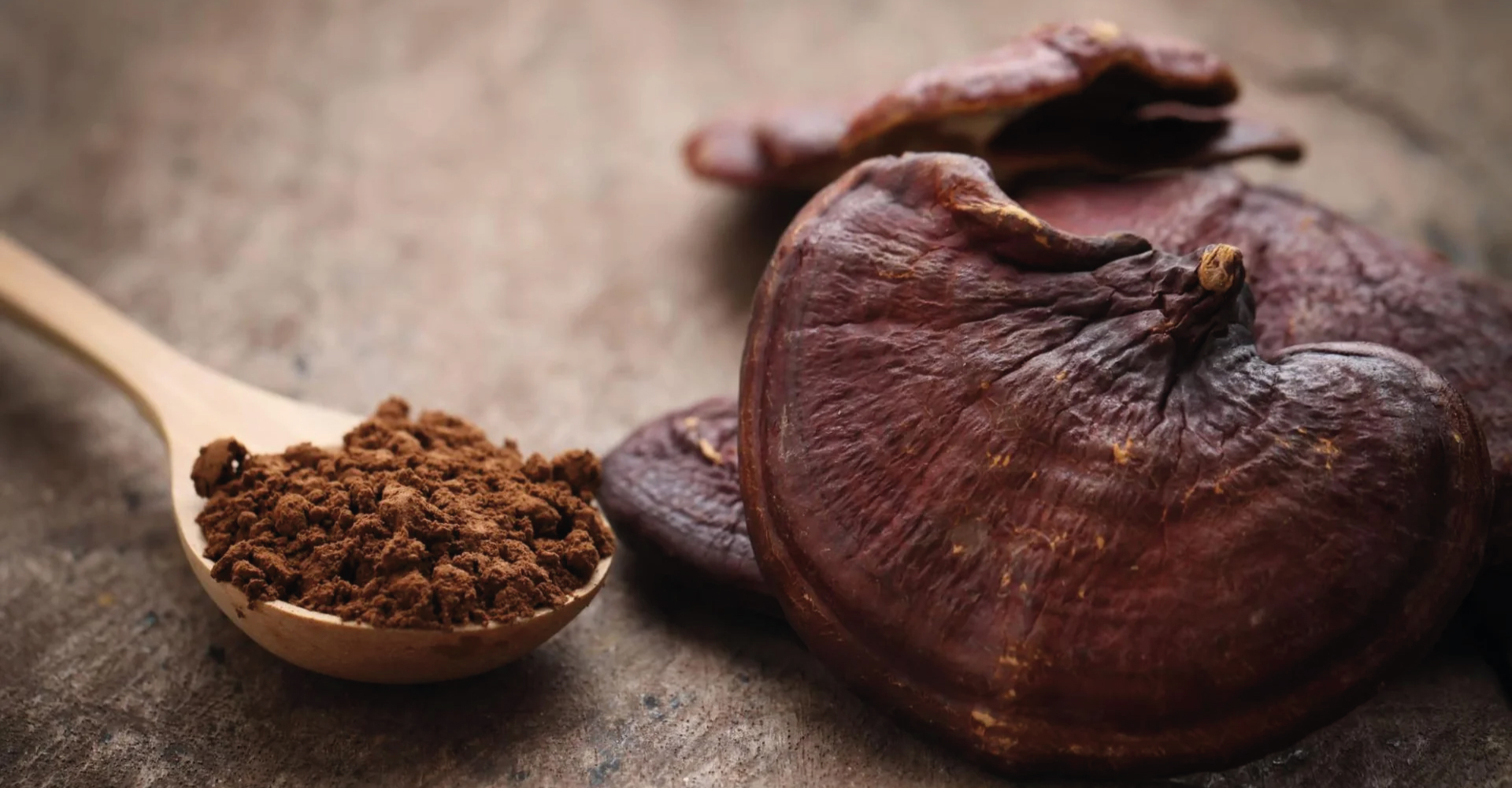
Aspect of the Reishi: The Reishi mushroom is easily recognized by its fruiting bodies lacquered rust colored with stretch marks wavy, and a lower part pale and porous.
Where is the Reishi: Present in subtropical and temperate Asia, Europe and North America, the Reishi thrives in hardwoods such as oak and maple, and plays an essential role in the health of forests as a species is saprophytic.
Health benefits: The reishi promotes the immunological balance, adaptation to stress, cardiovascular health, digestive comfort, and energy levels, which makes it an ally integral to the well being of the entire body.*
Cultural importance: Venerated in the practice of traditional chinese, japanese, and Korean, Reishi has symbolized longevity and good fortune, appearing in folklore, art, and medicine for millennia.
Appearance and scientific classification of the Reishi
Whether Reishi Antler or Red Reishi, identify a Reishi mushroom is quite simple, since it is admired for its elegant and bright fruiting bodies. The surface of these robust fruiting bodies, with the form of a ledge or kidney disease, is usually red or rusty, with subtle color variations (or striae) that reflect their pattern of growth. Its upper surface is glossy, almost lacquered, especially when it is wet. To be a fungus poliporoso, Reishi releases its spores on the bottom, pale and porous.
What does he look like reishi?
The fruiting bodies of the mushrooms typically have between 5 and 20 cm in diameter. The variations in their shape and size are influenced by environmental factors, as well as by the specific genetic strain. These differences tend to be appreciated by the micófilos, some of which retain the fruiting bodies of the mushrooms as natural decor.

A Reishi mushroom large and vibrant that showcases their bright hues of red, orange and yellow.
Reishi in Latin: shiny skin
The Latin binomial of the reishi is Ganoderma lucidum , a name which highlights its distinctive bright appearance. The name of the genre Ganoderma roughly translates as “skin bright”, while lucidum means “bright” or “shining”, which gives the meaning of “skin bright and sparkly,”. This name, given by taxonomists in the 1880s, it highlights clearly the striking lacquered surface of the reishi and his long-lasting impression.
Characteristics of the mycelium of Reishi
The mycelium of the Mushrooms usually grow in a circle, forming a texture, whitish and fluffy. It grows rapidly and becomes dense, flat, and acquires a golden brown color with age. Sometimes, even develop rings or zones with age. Some strains may develop a brown discoloration on the surface that contains the spores (the himenio ) to be grown in certain types of agar, forming often a layer distinctive under the mycelium.

Mycelium of Reishi growing in a Petri dish, showing radial patterns and formations with textured.
Life cycle of reishi
Reishi is a mushroom annual that typically bear fruit from may to November, to emerge out of trees and stumps of hardwood miceliados. Occasionally, one sees him emerge from the ground, where it has been growing in roots buried.
As a reproductive part of the organism, the fruiting bodies of the Mushrooms have a relatively short life. Usually last for days to several weeks before breaking down. In some environments, a fruiting body may be preserved in a tree during the winter, although it is not alive or viable. In comparison, the same as occurs with other species of fungi, the mycelium is the main and most active of the body of Reishi, with a shelf life of months or years. The fruiting bodies release spores that can inoculate new trees or logs host, where the mycelium is set and restart the life cycle.
Where to grow Reishi mushrooms?
Although it is relatively rare in the wild, the native habitats of the Reishi mushrooms are widely distributed throughout the world, including Asia, Europe and north America. It is found in subtropical regions such as the temperate and usually prefer humid environments.
As the fungus that digests wood, Reishi grows in a stunning variety of hardwood trees. Depending on your local ecosystem, a body of Reishi mushroom can grow on oak trees, maple trees, plums, wild or even palm trees, oh, just to name a few!

A Reishi mushroom brilliant that grows on the trunk of a tree covered in moss in a forest.
Image description:
A Reishi mushroom brilliant that grows on the trunk of a tree covered in moss in a forest.
Mushrooms are generally considered to be a fungus saprophyte apparently, that digests matter dead or dying (in particular, timber). Some mycologists believe that I could present a parasitic behavior towards living trees in niche-specific environmental. Despite this, it is generally considered to be beneficial from an ecological point of view. Using the hidden action of its mycelium, the reishi breaks down the organic matter and redistributes nutrients essential to their environment, play a vital role in the maintenance of health and the balance of the forest ecosystems.
The reishi mushroom grows in various parts of the united States, but is most commonly found in the Pacific northwest, the midwest, the northeast and the Appalachian region. Several closely related species of the genus Ganoderma it is also found in the united States. It can be difficult to distinguish it from the reishi ( G. lucidum ) to the naked eye, as they all have fruiting bodies woody-shaped platform and look pitted.
Cousins and like Reishi
Since the Reishi was assigned for the first time the Latin binomial Ganoderma lucidum , the genomic classification of the genus Ganoderma it has become more and more accurate. Some species (in particular, G. tsugae and G. oregonense look both G. lucidum you can't always easily differentiate with the naked eye, but depend on your genetics. Although not all of these “cousins” offer the same benefits for health, some are still known as “Reishi”. In fact, the Reishi is often considered as a constellation of closely related species, each with their own unique ecological features.*
Ganoderma tsugae
Unlike G. lucidum , which tends to prefer oak and other hardwoods G. tsugae prefer a set of guests, more specialized, such as the conifers. It is a close relative of Ganoderma lucidum and is commonly referred to as “the platform of varnish hemlock” due to its strong association with the tree of hemlock ( species Tsuga ). While it is most commonly found growing in hemlock, this species has also been reported in spruce, white ( Abies concolor ) in the regions of southwestern north America.

A fungus Ganoderma tsugae with a hat tough and textured, and a margin yellow and white.
Ganoderma oregonense
Ganoderma oregonense thrives in a variety of conifers dead or decaying, with a marked preference for the trees of hemlock. This species is distinguished by its impressive size, being significantly larger and bulky the G. lucidum . One of its most striking features is the pulp is thick and fluffy of his hat, which distinguishes it from its relatives. In addition, the G. oregonense is adapted naturally to colder climates, a marked contrast to the environments warmer than you would prefer the G. lucidum .

A fungus Ganoderma oregonense with a hat in an intense red that grows on a tree covered with moss.
Ganoderma curtisii
Among the “Reishis” american, Ganoderma curtisii it stands out for its unique appearance and their ecological adaptations. Unlike other species of this group, such as the G. lucidum or the G. tsugae , the G. curtisii it is distinguished by its hat yellow, that develops as the fungus matures, a key feature that helps to distinguish in the field. The classification of these closely related species is often based on their ecological preferences and trees hosts, rather than biological differences. For example, it is known that the G. lucidum form chlamydospores in culture (spores with thick walls that help the fungus to survive in adverse conditions), a feature absent in the G. tsugae . These subtle distinctions do G. curtisii a vivid example of how the fungi adapt to their environments, sharing a common lineage within the genus Ganoderma .
While distinguishing these species according to their physical characteristics and habitat, can offer valuable information, researchers continue to refine their classification. Use advanced genetic tools, such as PCR-Rdna and compatibility testing mating (infertility), to determine if the different strains can be successfully replicated. These ongoing studies highlight the close relationships within the genus Ganoderma and they reveal how dynamic and evolutionary is the taxonomy fungal.
Health benefits of reishi mushrooms*
Reishi has been associated with the long term well-being for millennia, an association that is consistent with recent scientific research. It has been shown that the reishi mushroom benefits a wide range of body systems, while promoting relaxation and an adaptation healthy daily stress. Due to its tonic action and support, it is usually taken for weeks, months or even years to promote well-being in the long term.*
Although the fruiting bodies of the Mushrooms have been traditionally used for its beneficial properties, recent scientific research on Reishi have explored a wider range of compounds present in all of his agency, in particular in its mycelium. This has strengthened the understanding of the mycelium of Reishi and its numerous benefits for the health.*
The reishi promotes heart health*
The reishi offers a supportive soft and full to the cardiovascular system. Research shows that reishi helps to improve various aspects of heart health, from the levels of cholesterol and blood pressure (that are already within normal limits) up to the activity of cardiac cells. Interestingly, the reishi mushroom has also been associated traditionally with the heart in the traditional practices of the chinese. Reishi also helps to keep blood sugar levels within normal limits, an important component of cardiovascular fitness.*
The reishi promotes an immune response that is well-balanced*
It has also been found that reishi promotes an immune response that is balanced and active. To promote the immunomodulatory activity, enhances the immune system's natural ability to respond and recover the balance. Research also suggests that reishi promotes an immune function is well balanced in the intestinal tract, which promotes balance immune to general and digestive health.*
The Reishi promotes stress reduction, relaxation and energy*
The reishi promotes mental well-being and physical facilitate the adaptation to the stressors of everyday life. It has been proven that it helps the body to recover the state of the “rest and digestion” by calming the sympathetic nervous system, which is activated during stress. In addition to promoting relaxation, the research suggests that reishi can also contribute to a state of mind in balance.*
Several studies have indicated that Reishi promotes sleep latency, i.e., the ability of the body to fall sleep, in addition to improving the overall quality of the same. Interestingly, despite its soothing properties, it is not known that Reishi may cause drowsiness. On the contrary, some studies have shown that Reishi helps reduce fatigue and promotes healthy levels of energy. These benefits combined make Reishi is a mushroom very popular to promote relaxation, energy, and concentration.*

A Reishi mushroom dry with a hat bright and full of texture that rests on a wooden surface.
Reishi for the health of the nervous system*
Preliminary investigations suggest that Reishi can contribute to the overall health of the nervous system. When combined with Lion's Mane, offers synergistic gains that promote memory, mood and restful sleep.*
The reishi promotes digestive comfort*
The research suggests that Reishi promotes digestive health to the benefit of the intestinal microbioma. It appears to promote the growth of the microflora probiotics, contributing to a gut environment more healthy. In addition, studies show that Reishi promotes the balance of the immune function in the intestinal tract, improving digestive comfort as the immune health in general.*
Reishi: an ingredient that is unexpected for the care of the skin.*
Although the care of the skin might not be the first thing that comes to mind when you think of Mushrooms, this fungus has become an increasingly popular ingredient in products for the care of the skin. To promote the antioxidant activity daily, Reishi can promote the health of the skin when applied topically.*
The reishi promotes balance throughout the body*
As you can see, the Reishi offers a wide range of benefits for the entire body. In addition to the above benefits, it also promotes the health of the liver and the antioxidant activity daily. Some studies also suggest that Reishi can promote joint health.*
Given the large potential benefits of Reishi for your health and your support for the adaptation to the stresses of daily life, it is an excellent addition to a routine of supplements usual! With time, this functional food can promote smooth and efficient the general welfare, and systemic.*
Cooking with reishi
In the united States, the reishi is not usually considered to be a fungus culinary because of its texture woody and bitter taste. However, it has a long history of use in Asia as a flavouring agent for wine, beer, and other beverages, where its earthy flavor is a welcome addition. The fruiting bodies of the mushrooms are also an important ingredient in some soups, traditional chinese, and even have been prepared traditionally as a tea, consumed for its health benefits.*
The mycelium of Reishi has been the object of growing scientific research due to its benefits to human health. Instead of used as an ingredient for cooking, are often prepared as a supplement. Usually comes in capsules, powder, or liquid extract, which facilitates quick addition to food and drinks for an extra dose of health.*
Traditional use of reishi
Reishi has a long and storied history, and is present in the folklore —and even in tapestries!— China, Japan and Korea. This species has been depicted in countless paintings, sculptures and textiles.
Associated with good fortune and good health, the use of the Reishi used to be reserved for royalty and other privileged classes. Ling Zhi , known as the Reishi mushroom in China, is translated as “fungus divine”, which reflects its esteemed reputation. Reishi also means “fungus divine” in japanese.*

Reishi mushrooms with hats widths and lacquered who grow up in a block cultivated.
Reishi is documented for the first time in a recognized text in chinese herbal for more than 2000 years, which highlights its historical significance in traditional medicine. However, they discovered the remains of this fungus in three sites of neolithic Zhejiang province, China, dating back more than 6000 years ago. This suggests that humans have interacted with the reishi, and may possibly have been used for a long time that reveals the recorded history.
The reishi mushroom is now cultivated throughout the world, maintaining its revered status as a fungus that promotes the emotional and physical wellbeing. For example, in the West, it is often associated with promoting emotional balance and support for the cardiovascular system, two aspects are interconnected in cardiovascular health.*
As it has done for thousands of years, Reishi continues to inspire artists with her unique beauty and intrinsic. The fruiting bodies are generally kept as decoration, while its inverse porous provides a canvas ideal for record drawings intricate. Ganoderma applanatum , also known as “The Real the Artist's Conk”, is associated famously with this artistic practice, which makes the Reishi in the canvas perfect for artists lovers of fungi.
To carry: The timeless appeal of reishi
The “Mushroom of Immortality” has built a great reputation over the past few millennia, evolving symbol of longevity in traditional practices to an object of fascination in the art of cultural and culinary exploration. Whether you enjoy looking at nature, admiring its lustrous beauty oxidized or incorporating it into their routine of well-being, Reishi remains a testimony of the enduring relationship between humans and fungi. With its diverse range of potential health benefits, and its deep-rooted presence in the story, the Reishi continues to captivate the world as a reminder of the exceptional ability of nature to nurture and support us.
Leave a Comment
Your email address will not be published. Required fields are marked *
You must be logged in to post a comment.